Whether you're managing a fleet maintenance business, providing building services or running a professional cleaning firm, one of the most essential tools in your toolkit is the commercial pressure washer. Unlike residential units that collect dust and seldom get used (typically just a couple of times per year), commercial pressure washers are designed for heavy-duty usage - not only do they endure the rigors of daily activity, but they also perform consistently at an elevated standard.
Not every commercial pressure washer is created equally, though. There are literally hundreds of commercial pressure washers on the market today, with prices ranging from $500 to $15,000 or more, which can make choosing the right commercial pressure washer overwhelming.
This guide will give you an overview of what factors to consider when selecting a pressure washer for your business; which manufacturers provide top quality products; as well as helpful purchasing tips that will allow you to get the most bang for your buck in the year 2026!
What Is a Commercial Pressure Washing Machine?
A commercial pressure washing machine is a heavy-duty cleaning unit designed for frequent, high-intensity use in professional or industrial settings. Compared to consumer-grade models, commercial units offer:
- Higher PSI (pounds per square inch) and GPM (gallons per minute)
- Longer duty cycles — often rated for 8–10 hours of continuous operation
- More durable components (stainless steel, brass, ceramic)
- Industrial-grade motors and pump assemblies
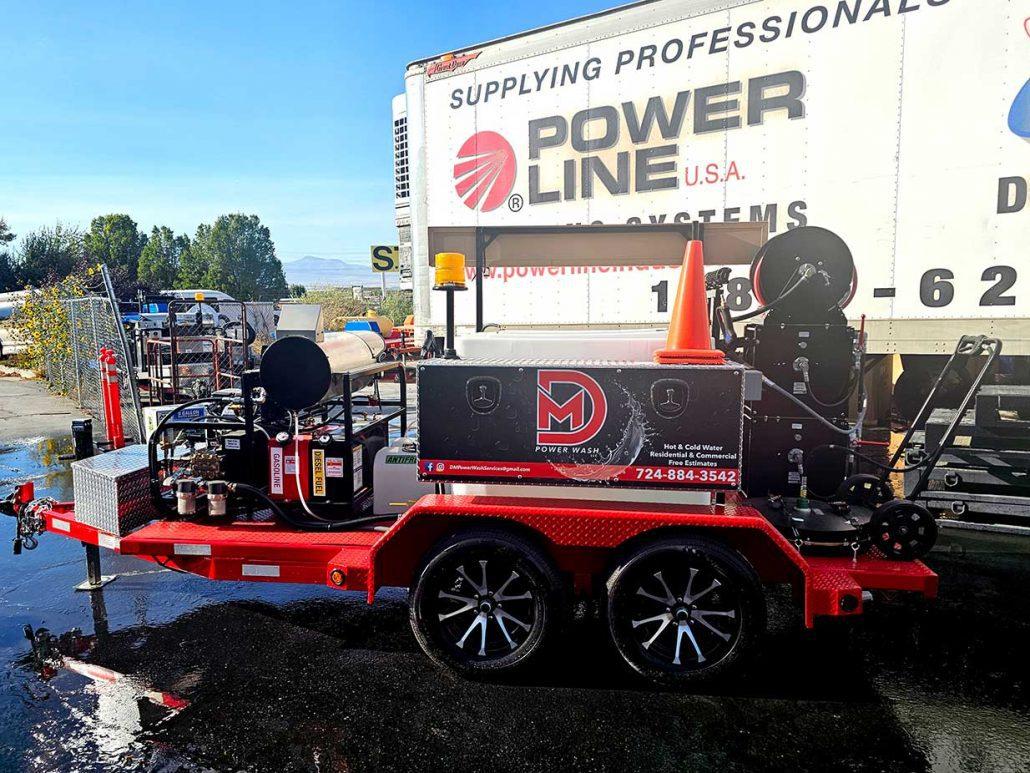
- Greater portability options including mounted trailers and skid units
They are used across industries including construction, hospitality, fleet services, agriculture, manufacturing, and contract cleaning.
Buying Tips for 2026
Tip 1: Match the Machine to Your Jobs
There are powerful machines available on the market but don’t go out and purchase the most powerful machine available. Using a washing machine that produces 5000 PSI can potentially cause damage to the vehicle's paint and waste water as well. You will want to determine what the primary use/application for your machine will be so you can find a machine that is optimized for that use/application.
Tip 2: Total Cost of Ownership Matters More Than Sticker Price
A $1,500 machine that breaks down constantly will cost more over three years than a $4,000 unit with a solid warranty and parts availability. Factor in:
- Warranty length and what it covers
- Parts availability and cost
- Local service network
- Fuel consumption (for gas/diesel models)
Tip 3: Don't Overlook GPM
Many buyers fixate on PSI and ignore GPM. In practice, GPM often determines how quickly you can finish a job. A machine with 3,000 PSI and 5 GPM will often outperform a 4,000 PSI / 3 GPM unit in real-world productivity.
Tip 4: Buy from a Dealer, Not Just a Retailer
For commercial equipment, a knowledgeable dealer is invaluable. They can advise on configuration, handle warranty claims, stock parts, and service the machine when needed. Big-box retail and online-only purchases can leave you stranded if something goes wrong.
Tip 5: Think About Water Supply
Trailer-mounted units often come with on-board tanks (100–500 gallons), which is critical for remote job sites. If you're working in locations without reliable water access, factor this into your choice.
Tip 6: Review Local Regulations
In 2026, water reclaim and discharge regulations have tightened in many municipalities, particularly for commercial operators washing in parking lots or near storm drains. Ensure your setup is compliant — you may need a reclaim system or filtration unit.
Maintenance Best Practices
Even the best machine will fail without proper care. Follow these habits:
- Flush the system after every use, especially if you used detergents
- Check pump oil regularly — change every 50–100 hours or per manufacturer guidelines
- Inspect O-rings and seals monthly; replace before they fail
- Winterise properly if storing in freezing temperatures — water left in lines and pumps will crack them
- Keep nozzles clean — blocked nozzles create back-pressure that strains the pump
- Log machine hours to track scheduled maintenance
Conclusion
A commercial pressure washing machine is a long-term investment. The right machine — matched to your applications, properly maintained, and backed by a reliable dealer — can serve you profitably for a decade or more. The wrong one will drain your budget in repairs and downtime.
Take the time to assess your workload, compare PSI and GPM against your job requirements, and choose a brand with strong service support in your area. In 2026, the market offers more capable, fuel-efficient, and environmentally considerate options than ever before — so there's no reason to settle for anything less than the right fit for your business.
Comments
Post a Comment